Cat's Cradle
“Live by the harmless untruths that make you brave and kind and healthy and happy.”
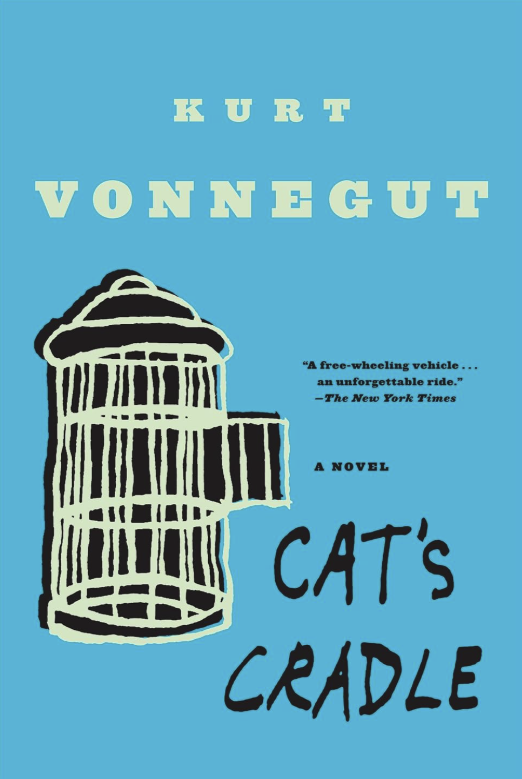
About This Book:
Published: 1963
Genre: Satirical Fiction, Science Fiction
The world is absurd, humans are foolish, and we're all probably doomed.
Cat's Cradle follows a writer researching a book about the day the atomic bomb was dropped on Hiroshima. His investigation leads him to the children of Felix Hoenikker, one of the bomb's creators, and to a fictional Caribbean island called San Lorenzo, where he discovers something far more dangerous than nuclear weapons: ice-nine, a substance that could end all life on Earth.
The island has its own religion called Bokononism, which openly admits it's based on lies but argues that useful lies are better than useless truths. Meanwhile, the scientists who created world-ending weapons did so not out of malice but out of childlike curiosity, never pausing to consider consequences.
The novel is structured in short, punchy chapters that build a story both absurd and convicting. Vonnegut's tone is detached, almost casual, as he describes humanity careening toward catastrophe with a shrug and a darkly funny observation.
Published in 1963 during the Cold War, Cat's Cradle became a cult classic for its brutal honesty about human nature and its refusal to offer comfort or easy answers.
Perfect for readers who appreciate: Satire, dark humor, science fiction, philosophical fiction, critiques of religion and science,
Why We Recommend This Book:
Vonnegut became one of America's most important satirists by refusing to look away from uncomfortable truths. He wrote about war, science, religion, and human nature with a tone that's both cynical and strangely compassionate.
This book matters for anyone grappling with meaninglessness, watching humanity make the same mistakes repeatedly, or wondering if anything we do actually matters. Vonnegut doesn't offer solutions. He just holds up a mirror and says, "Look at what we're doing. Isn't this absurd?" Sometimes that clarity is enough.