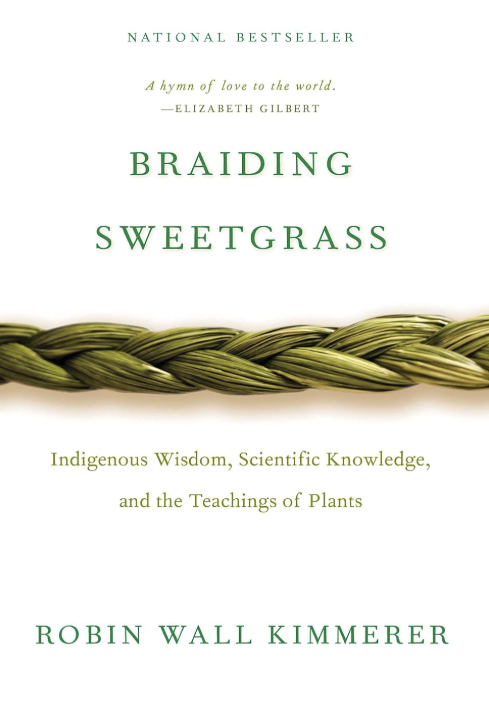
Braiding Sweetgrass: Indigenous Wisdom, Scientific Knowledge, and the Teachings of Plants
“Paying attention is a form of reciprocity with the living world, receiving the gifts with open eyes and open heart.”
About This Book:
Published: 2013
Genre: Nature Writing, Environmental Literature, Indigenous Studies
Robin Wall Kimmerer is both a botanist and a member of the Citizen Potawatomi Nation, and she draws on both perspectives to show how plants and animals are our oldest teachers.
The book is structured as a series of essays organized around the life cycle of sweetgrass: planting, tending, picking, braiding, and burning. Through stories, Kimmerer explores the concept of reciprocity. In Indigenous traditions, the earth's gifts create responsibility. We take, yes, but we must also give back.
Published in 2013, the book became an unexpected bestseller years after release, spending over 100 weeks on the New York Times bestseller list. Readers responded to Kimmerer's gentle but urgent call to reimagine our relationship with the earth before it's too late.
Robin Wall Kimmerer is a distinguished professor of environmental biology and the founder of the Center for Native Peoples and the Environment. She has spent her career working to integrate Indigenous ecological knowledge with Western science.
Perfect for readers who appreciate: Nature writing, Indigenous knowledge, environmentalism, botany, reciprocity and gratitude, sustainable living
Why We Recommend This Book:
Braiding Sweetgrass is particularly good for thinking about what we owe the earth, how gratitude can be a practice rather than just a feeling, and whether it's possible to live in reciprocity with the natural world instead of just taking from it.
Kimmerer writes about the concept of the Honorable Harvest: take only what you need, use everything you take, never take the first or the last, and give something back. These aren't abstract principles but practical guidelines that Indigenous peoples have followed for generations to maintain abundance rather than create scarcity.
The book challenges the Western view that humans are separate from and superior to nature. Kimmerer shows how treating plants and animals as relatives rather than resources changes everything about how we live. Her writing is both scientifically rigorous and deeply spiritual without being preachy.