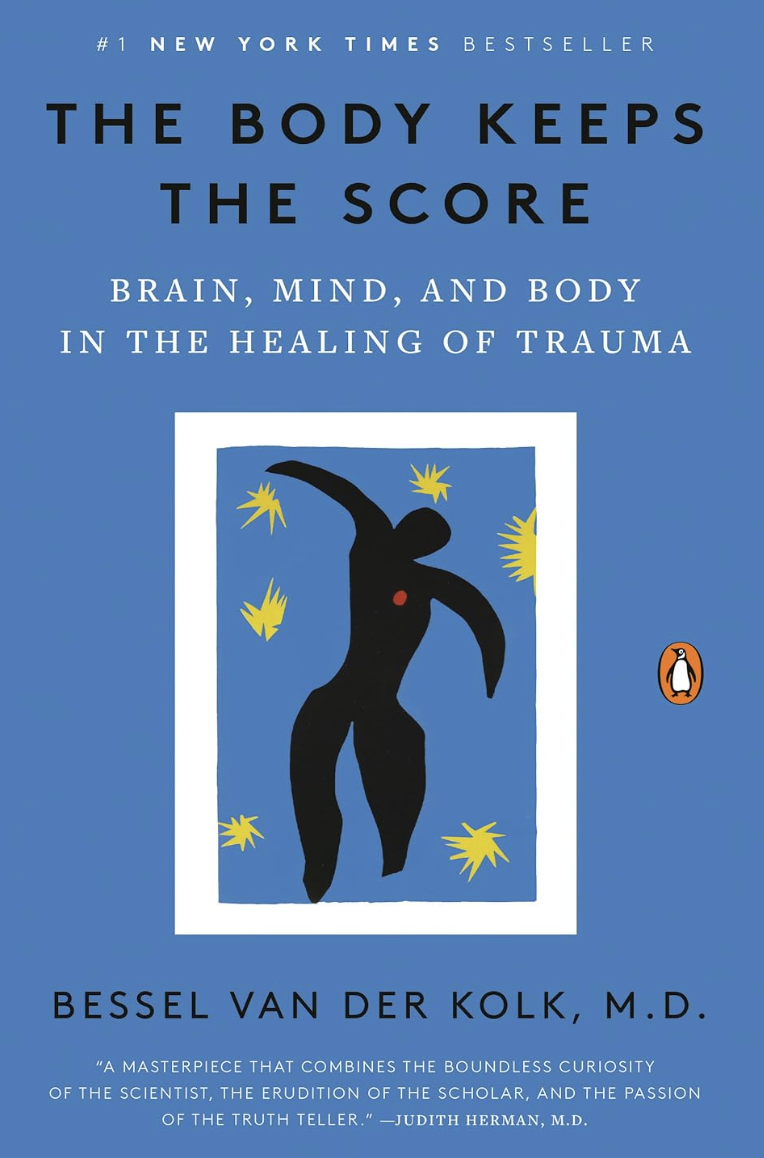
The Body Keeps the Score: Brain, Mind, and Body in the Healing of Trauma
“It takes enormous trust and courage to allow yourself to remember.”
About This Book:
Published: 2014
Genre: Psychology, Mental Health, Self-Help
Bessel van der Kolk spent decades working with trauma survivors. What he discovered challenged everything the psychiatric establishment believed about trauma:
It's not just in your head. It's in your body.
The Body Keeps the Score explains how trauma literally reshapes the brain and nervous system. When something terrible happens, the experience doesn't just become a bad memory. It gets encoded in the body as tension, chronic pain, panic responses, and physical sensations that keep replaying long after the danger has passed.
Traditional talk therapy alone often fails trauma survivors because you can't think your way out of something that's been wired into your nervous system.
Through case studies and research, van der Kolk offers both an explanation for why trauma affects us the way it does and a roadmap for healing that goes beyond conventional therapy.
Published in 2014, the book became a massive bestseller and changed how we talk about trauma, making it clear that healing requires addressing the whole person, not just their thoughts.
Perfect for readers who appreciate: Psychology, neuroscience, trauma recovery, mental health, somatic therapies, understanding how the mind and body connect
Why We Recommend This Book:
This book matters for anyone struggling with PTSD, anxiety, chronic pain, or patterns they can't seem to break. It's also essential for therapists, doctors, and anyone who works with trauma survivors. Van der Kolk offers evidence-based solutions that actually work.
What makes this book powerful is van der Kolk's compassion combined with scientific rigor. He takes trauma seriously without pathologizing survivors. He acknowledges how hard healing is while insisting it's possible. And he challenges the medical establishment's overreliance on medication and traditional talk therapy when other approaches might work better.