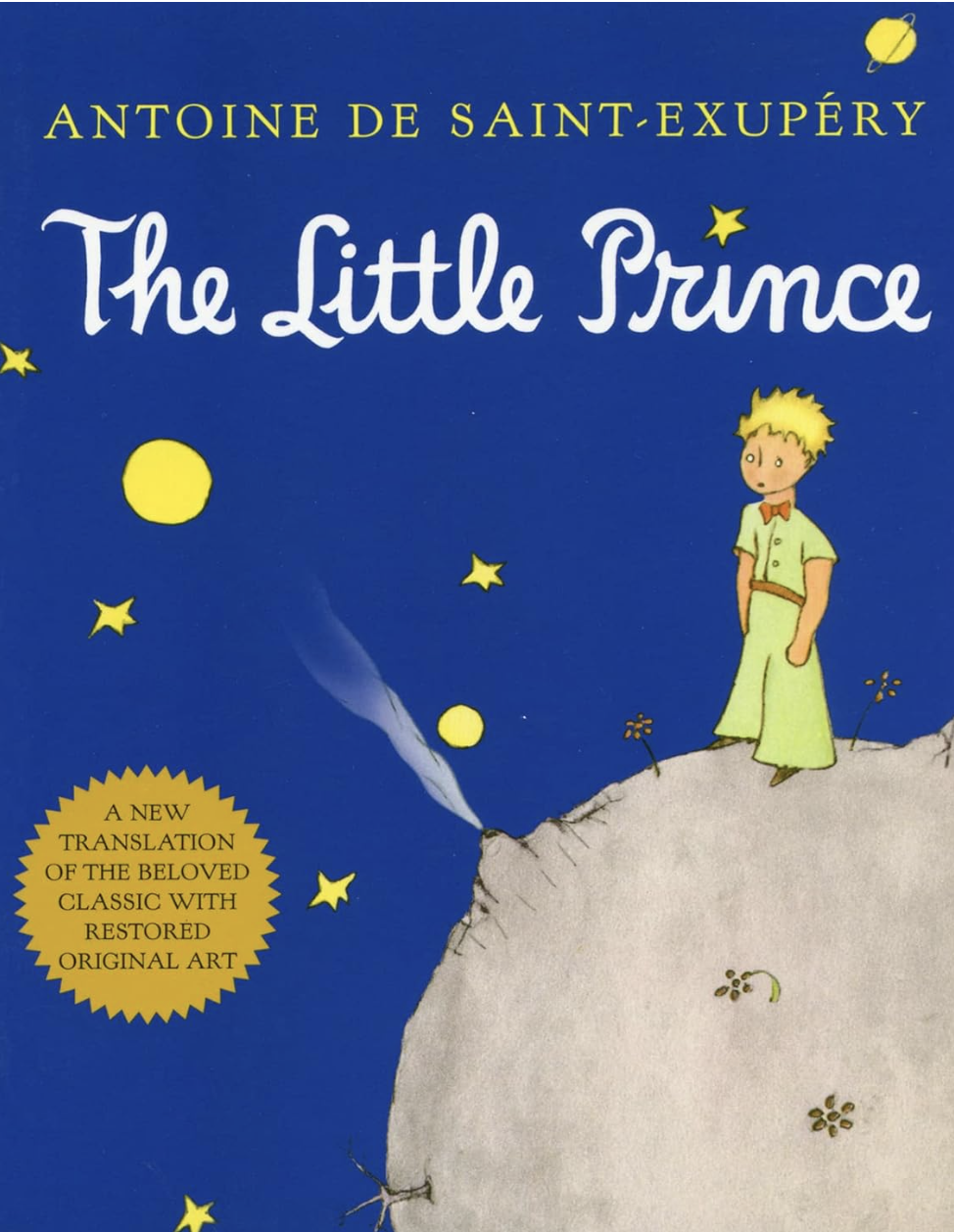
The Little Prince
“To me, you are still nothing more than a little boy who is just like a hundred thousand other little boys. And I have no need of you. And you, on your part, have no need of me. To you I am nothing more than a fox like a hundred thousand other foxes. But if you tame me, then we shall need each other. To me, you will be unique in all the world. To you, I shall be unique in all the world...”
About This Book:
Reading Rating:
Published: 1943
Genre: Fable, Philosophy, Children's Literature
The Little Prince begins with a pilot stranded in the Sahara Desert who meets a small boy from another planet. The boy asks him to draw a sheep, and from there unfolds one of the most beloved and philosophical stories ever written.
Through the little prince's journey across different planets and his encounters with strange adults, Saint-Exupéry explores what we lose when we grow up. The adults the prince meets have forgotten how to see what matters. They're obsessed with numbers, power, and looking important while missing everything that makes life meaningful.
At the heart of the story is the prince's relationship with a rose he left behind on his tiny planet, and a fox who teaches him the book's most famous lesson: "It is only with the heart that one can see rightly; what is essential is invisible to the eye."
Published in 1943, The Little Prince has sold over 200 million copies and been translated into hundreds of languages. It's technically a children's book, but its wisdom about love, loss, loneliness, and what makes life worth living speaks to readers of all ages.
Perfect for readers who appreciate: Fables, philosophy, illustrated books, reflections on childhood and adulthood, love and loss
Why We Recommend This Book:
The Little Prince appears simple on the surface, a short story with charming illustrations. But beneath that simplicity is a profound meditation on what we value and why.
This book matters for anyone who feels disconnected from what once brought them joy, anyone struggling to see meaning in the routines of adult life, or anyone who needs reminding that relationships require tending and presence.
What makes this story endure is how it honors both the sadness of loss and the beauty of having loved at all. The little prince's journey is bittersweet, and Saint-Exupéry doesn't pretend otherwise. But he suggests that meaning comes from the care we give, not from protecting ourselves from heartbreak.