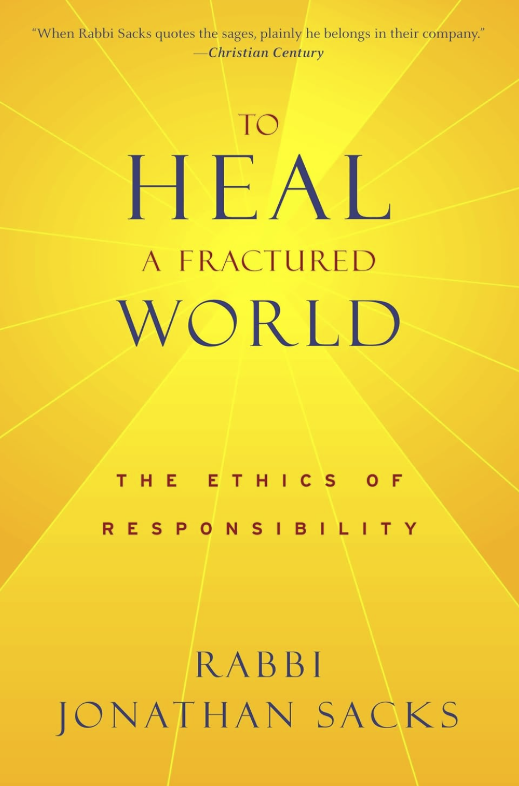
To Heal a Fractured World: The Ethics of Responsibility
“As long as there is hunger, poverty and treatable disease in the world there is work for us to do. As long as nations fight, and men hate, and corruption stalks the corridors of power; as long as there is unemployment and homelessness, depression and despair, our task is not yet done, and we hear, if we listen carefully enough, the voice of God asking us, as he asked the first humans, ‘Where are you?’”
About This Book:
Published: 2005
Genre: Philosophy, Ethics, Spirituality
We live in a world that feels increasingly broken, and most of us don't know what to do about it. To Heal a Fractured World offers a framework for that feeling; a Jewish tradition called Tikkun olam, repairing the world.
Rabbi Jonathan Sacks argues that responsibility isn't a burden we should avoid but the very thing that makes life meaningful. The question isn't whether we can fix everything, but whether we're willing to show up for what's ours to do.
Drawing on Jewish tradition, philosophy, and contemporary wisdom, Sacks explores what it means to live as if our actions matter. He grapples honestly with suffering, injustice, and the limits of individual action, while still insisting that we must try.
The book addresses universal questions that transcend its Jewish roots: What do we owe each other? How do we respond to suffering we didn't cause? What does it mean to be fully human when the world feels irreparably broken?
Perfect for readers who appreciate: Philosophy, ethics, spirituality, social justice, Jewish wisdom, interfaith dialogue
Why We Recommend This Book:
Responsibility isn't a burden. It's what makes us human. When we ask "What is mine to do?" instead of "Can I fix this?", we shift from paralysis to possibility. We stop waiting for someone else to act and start showing up where we can.
This book is for anyone overwhelmed by the world's problems, uncertain how their small actions could possibly matter, or searching for a way to live with integrity when everything feels broken. Sacks doesn't promise that our efforts will solve everything. He promises something better: that trying is what gives life meaning.
What makes this book essential is Sacks's refusal to choose between hope and realism. He acknowledges how limited we are while insisting that limitation isn't an excuse. He writes with wisdom that changes not just how you think, but how you move through the world.